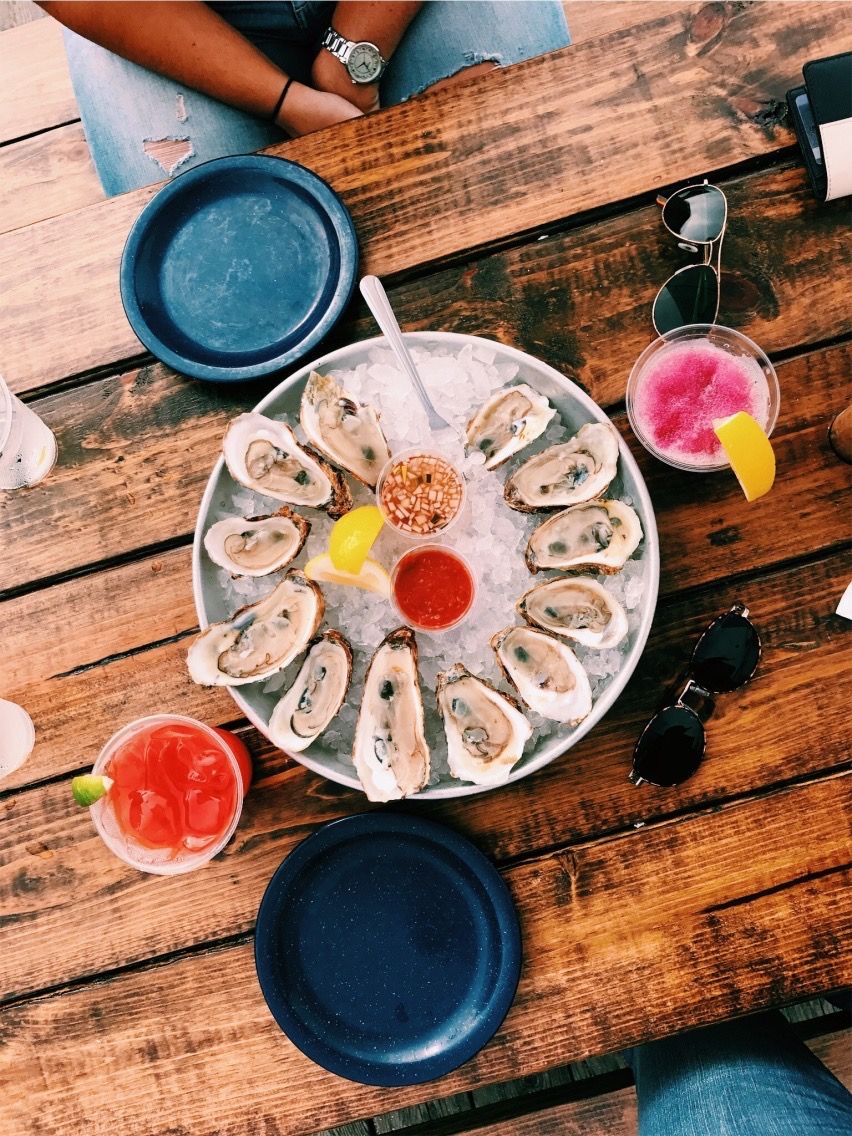

When people think of Nantucket seafood, the legendary Nantucket bay scallop usually steals the spotlight. But if you visit the island during the warmer months, there is another bivalve quietly ruling the culinary scene: the Nantucket oyster.
Over the last few decades, a booming community of local aquaculture farmers has turned the pristine, icy waters of Nantucket Harbor into a world-class oyster haven. Today, whether you are at one of the fine dining or casual gathering spots, or hosting a backyard clambake, an ice-cold platter of local oysters is an absolute island staple.
Here is everything you need to know about Nantucket’s thriving oyster scene and why they taste so spectacular.
It’s All About the "Merroir"
Wine lovers are deeply familiar with terroir, the idea that regional soil, climate, and terrain dictate the flavor of a grape. In the oyster world, we talk about merroir.
Because oysters are filter feeders, they pump gallons of water through their shells every day. Therefore, an oyster tastes precisely like the water it was raised in.
While almost all East Coast oysters belong to the exact same species (Crassostrea virginica), a Nantucket oyster tastes completely different from a Wellfleet, a Blue Point, or a Cotuit. Swept by cold, clean Atlantic currents and nourished by the island’s nutrient-rich harbors, Nantucket oysters are famous for their crisp, high-salinity brine followed by a surprisingly sweet, clean finish.
Meet the Local Legends: Nantucket’s Oyster Farms
Nantucket boasts several boutique oyster growers, each occupying a specific "micro-climate" in the harbor that gives their oysters a signature flavor profile.
Here's a rundown of the standout Nantucket oyster farms and what makes each one distinct:
Grey Lady Oyster Farm: Matt Herr, grown entirely in deep water with no time in the shallows, unlike most other Nantucket farms. Herr keeps the operation intentionally small to protect consistency. Result: the cleanest, crispest, least complex flavor of the group, "purely what the oyster itself tastes like," in Herr's words. This is the one to reach for if you want a straightforward, briny oyster with nothing extra going on.
Devil's Creek Oysters: Sean Fitzgibbon Located in Wauwinet Bay, on the far eastern side of the island. Fitzgibbon emphasizes the pure, fast-moving Atlantic currents surrounding Nantucket as the defining factor, a textbook "merroir" story. Expect a clean, ocean-forward taste shaped by that open-water exposure.
Pocomo Meadow Oyster Farm: Emil Bender (Hang Ten Raw Bar) One of the oldest farms on the island, sited where freshwater springs bubble up through the sand and a twice-daily tidal flush moves through a narrow channel. That freshwater influence is the differentiator, it produces a salty brine but with strong minerality and herbal notes, a more complex flavor than the deep-water farms. Some oysters here are even grown "free range" directly in the marsh rather than caged.
Retsyo Oyster Farm: Andy and Roni Roberts, also in Wauwinet, just steps from The Wauwinet Inn, and supplies Topper's restaurant. Similar coastal exposure to Devil's Creek, but the specific spot is prized by Topper's chef as its own expression of Wauwinet terroir. The takeaway being that even within the same general area, exact placement changes the oyster.
Coskata Shellfish Farm: Jamie Marks, located in Coskata Pond, a more enclosed body of water compared to the open-Atlantic farms. Marks wholesales to local fish markets rather than running his own raw bar, so these show up more often at retail counters than on restaurant menus specifically branded with the farm name.
Bass Point Oysters: Simon Edwardes, operates six acres in Nantucket Harbor, split between soft sand and muddy bottom, requiring wire cages in one section and floating gear in the other. The differentiator here is exposure: the site isn't protected from wind at any angle, so 2-3 foot surf naturally tumbles the oysters. That rough handling builds unusually strong, thick shells and a bright, salty flavor that carries through to the finish, more texture and shell strength than the calmer farms produce.
Fifth Bend Oysters: Simon Edwardes, a larger, 10-acre operation, also in Nantucket Harbor, combining floating cages in deeper water with bottom cages in the intertidal zone. Because the oysters move through multiple environments during their growth cycle, Fifth Bend's flavor is described as more layered than a single-method farm, it's the "both worlds" version of what Bass Point does in miniature. It's the higher-volume of the two (about 10,000 oysters a week) and the one now branded as a family business through Shells Angels Raw Bar.
The Throughline: The biggest single variable is water movement and exposure. Deep, calm water (Grey Lady) gives you clean and simple. Open Atlantic current (Devil's Creek, Retsyo) gives you bright and oceanic. Freshwater spring influence (Pocomo Meadow) gives you mineral and herbal complexity. Wind-churned harbor water (Bass Point, Fifth Bend) gives you brine, brightness, and noticeably tougher shells.
Together these six growers make up virtually the entire Nantucket oyster supply, about 95% of what's harvested locally stays on the island, served at spots like Cru, Òran Mór, The Seagrille, Languedoc Bistro, Brant Point Grill, Nautilus, and Topper's, or shucked fresh at Nantucket Island Seafood and Sayle's Seafood.
How to Eat a Nantucket Oyster Like a Pro
If you want to truly appreciate the island’s harvest, step away from the cocktail sauce. Heavy horseradish and tomato will completely mask the nuanced flavors of the harbor. Instead, follow the raw bar purist method:
- Check the Liquor: Don't dump out the clear liquid inside the shell! That's "oyster liquor," and it holds the pure, briny essence of Nantucket Sound.
- Sip and Chew: Tip the shell back, sip the liquor, and actually chew the oyster two or three times. This releases the internal sweetness and fat, balancing out the initial hit of salt.
- The Perfect Pairing: Pair your platter with a crisp Sancerre, a cold Muscadet, or a locally brewed Cisco Brewers Whale’s Tale Pale Ale.
A Feast with a Footprint
The best part about indulging in a dozen Nantucket oysters? You are actually helping the island environment.
Oysters are nature’s ultimate filtration systems. A single adult oyster can filter up to 50 gallons of water a day, removing excess nitrogen and keeping Nantucket's delicate marine ecosystem clear and healthy. By supporting local aquaculture, you're directly contributing to the preservation of the waters we all love.
So, next time you pull up to a raw bar on the island, ask your shucker what’s local. Your palate and the harbor will thank you.